|
Clouds are one of the main causes of uncertainty in predictions of
future climate, and are a key challenge in improving weather forecast
models. Led by Professor Robin Hogan, the
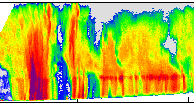
Clouds Group develops novel radar and lidar techniques to retrieve
cloud properties remotely, applies these techniques to understand
cloud processes and to evaluate and improve numerical weather forecast
and climate models, and develops efficient numerical methods for
atmospheric radiative transfer.
Note that since April 2014, Robin Hogan's primary affiliation is
ECMWF, so group membership is in decline, but selected threads of
research are continuing and these pages are being maintained.
Ongoing projects
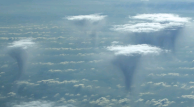
Observations and modelling of convective storms
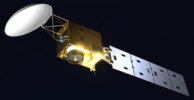
Active remote sensing of clouds from satellite
Evaluating and improving the physics of clouds in models
 |
We use long-term ground-based radar and lidar observations to
evaluate and improve the representation of clouds and associated
processes in models. We are involved in
the FASTER project to take
what was learned in
the Cloudnet project to
perform long-term evaluation of clouds in weather models. We are
using such observations to understand why most models
simulate mixed-phase clouds very
poorly. We are using Doppler lidar to evaluate the performance of
forecasts of boundary-layer type. Our model verification work has
led to developments in verification theory, including our finding
that the widely used "Equitable Threat Score" is not in fact
equitable.
|
Clouds, radiation and climate
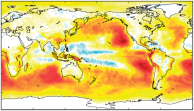 |
We develop novel radiative transfer techniques for more accurate
represention of the interaction of solar and infrared radiation in
climate models. Recent work includes using our "Tripleclouds"
scheme to estimate the global impact of the neglect of sub-grid
cloud structure in climate
models, and development of the full-spectrum correlated-k method for
efficient treatment of gases in the infrared. We are currently
working on a scheme to efficiently represent the flow of radiation
through the sides of clouds, which will be used to calculate the
impact of this phenomenon in climate models. This work is supported
by NERC. |
Code for download

|